
Resume & Cover Letter Mistakes That Are Costing Nurses Interviews (And How to Fix Them)
If you’ve been applying to nursing jobs and hearing nothing back or worse, receiving quick rejection emails, you’re not alone. And no, it’s probably not because you’re “not good enough,” “not competitive,” or “not cut out for the specialty.”
More often than not, the issue is your resume and cover letter.
As someone who has been on new grad residency hiring committees, worked as a hospital recruiter, and hired nurses as a nurse manager, I’ve reviewed hundreds if not thousands of nursing resumes and cover letters. And over the years, I’ve seen the same mistakes show up again and again.
These mistakes don’t just affect new graduate nurses. They also show up in applications from experienced nurses trying to change specialties, relocate, or make a career pivot.
So whether you’re applying for your first nursing job or planning a career transition, this post will walk you through the most common resume and cover letter mistakes nurses make and how to fix them so you can land more interviews.
Why Your Resume and Cover Letter Matter More Than You Think
Your resume is not just a summary of your experience. It’s your ticket into the organization.
It either:
Gets you an interview
Or quietly removes you from consideration
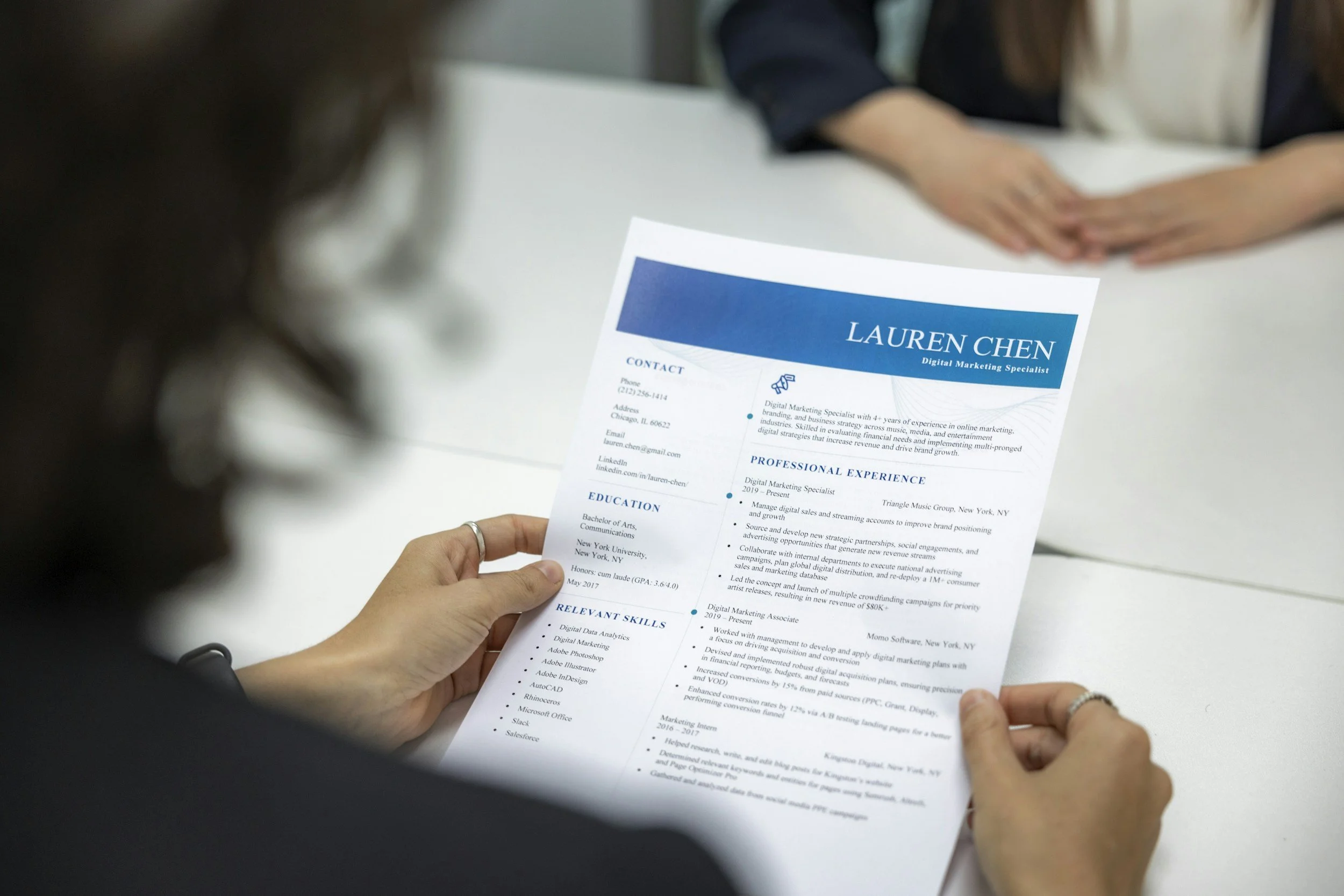
And here’s the hard truth: your resume and cover letter are often the only representation of you that a hiring team sees. Before they hear your voice. Before they meet you. Before they understand your personality, work ethic, or potential.
If those documents are unclear, generic, or difficult to follow, your application will likely land in the “no” pile — often without anyone giving it a second thought.
Hiring teams don’t usually have time to “figure out” your experience. If your application isn’t easy to understand, they simply move on.
How Do You Know If Your Application Isn’t Working?
Most nurses don’t realize there’s an issue until they start applying.
Here are some red flags that your resume or cover letter may need work:
You’re receiving automatic rejections within hours or days
You’re hearing absolutely nothing after applying
You’re applying to a lot of places but only getting interviews at places where you already have a connection
If this sounds familiar, let’s talk about why.
A Personal Story: When Strong Credentials Aren’t Enough
When I was in my final semester of nursing school, it was early 2012. Around February, new grad nursing positions for summer start dates suddenly began popping up.
I panicked.
I didn’t know jobs were posted that early. No one told me you could apply before graduating. And none of the job postings listed closing dates so I had no idea if they’d be open for weeks or hours.
At the same time, I was:
In my senior ICU capstone
Juggling exams and clinicals
Trying to survive the final stretch of nursing school
So I rushed my resume and cover letter.
I sent them to my mom (a retired nurse — helpful, but new grad hiring has changed a lot). I sent them to my then-boyfriend, now husband, who completely rewrote them but he’s a PA. I visited my college career center, where the advice felt very business-focused and not healthcare-specific.
Eventually, I made an executive decision and started submitting applications.

And I felt confident.
I had worked as a patient care technician throughout nursing school. I was captain of the women’s cross-country team. I was inducted into Sigma Theta Tau. I truly believed interviews would come easily.
Then I waited.
And waited.
Out of all the places I applied, only one organization called me, the hospital where I already worked as a PCT. Years later, after joining hiring teams myself, I learned the truth: that was likely a courtesy interview. Yes, those are very real.
Fast-forward almost 14 years, and I understand exactly why I struggled. My application documents weren’t strategic. They didn’t clearly highlight my strengths or differentiate me.
I dreamed of starting in a Level 1 trauma center ICU. Instead, I began my career on a med-surg unit at a small community hospital.
And honestly? I wouldn’t change it for the world.
That hospital shaped my career and gave me opportunities I never could have predicted. But I don’t believe struggling unnecessarily is some rite of passage. I want you to have options.
The Most Common Cover Letter Mistake Nurses Make
Let’s start with the cover letter because this is where I see the biggest missed opportunity.
Mistake: Writing a Generic, Cold Cover Letter
The fastest way to lose a hiring team’s interest is to submit a cover letter that clearly could have been sent anywhere.
Generic cover letters signal:

Lack of interest
Lack of effort
Lack of connection
Hiring teams can tell when a candidate wrote one letter and sent it to ten hospitals. And unfortunately, those letters are forgettable.
Your cover letter’s job is not to repeat your resume. Its job is to create connection.
When hiring teams are reviewing hundreds of applications, it becomes very easy to remove the human element. Your goal is to make the human connection palpable on the page.
What a Strong Nursing Cover Letter Does Instead
A strong cover letter:

Mentions the organization by name
Reflects an understanding of the unit, specialty, or mission
Shares why this role matters to you
Gives the hiring team a glimpse of who you are
You don’t need to overshare. But you do need to sound like a real person, not a template.
Don’t be afraid to share:
What draws you to that specialty
A brief experience that shaped your interest
Why their organization stands out to you
Your goal is to be remembered.
Resume Mistake #1: Confusion
One of the biggest resume issues I see especially with new grad nurses is confusion.
This shows up as:
Unclear timelines
Clinical rotations not labeled by specialty
Employment history that’s hard to follow
Sections that blend together
Here’s a simple test: give your resume to a family member and ask them to explain your experience back to you.
If they can’t clearly articulate it, neither can a hiring team.
Why Confusing Resumes Get Skipped
When I worked as a hospital recruiter, I spent a lot of time on phone screens asking candidates to walk me through their resumes.
Often, candidates had strong experience. They just didn’t know how to present it clearly.
But here’s the thing: most new grad nursing positions don’t include phone screens. Hiring teams don’t have the time or bandwidth to clarify your experience.
If your resume is confusing, they move on.
Resume Mistake #2: Poor Formatting and Organization
Clarity matters more than creativity when it comes to nursing resumes.
Your resume should be:
Easy to scan
Clean and professional
Intentionally organized
Use:
Clear headings
Bold or italics to separate sections
Consistent formatting
Ask yourself:
Can someone understand this in under 30 seconds?
Does the layout guide the reader’s eye naturally?
If the answer is no, it’s time to simplify.
Resume Mistake #3: Trying to Keep It to One Page at All Costs
There is no rule that a resume must be one page.
I often see nurses cramming information into tiny margins and dense bullet points, making the resume difficult to read.
Your resume should be:
Long enough to accurately reflect your experience
Short enough to avoid repetition
For example:
If you list Dean’s List under education, you don’t need to repeat it under awards
If multiple clinical rotations involved similar skills, you don’t need to restate the same bullet points
Clarity always wins over quantity.
Resume Mistake #4: Overstating Experience
Another issue I’ve encountered — less common but important, is overstating experience.

Hiring teams can usually tell very quickly when a resume doesn’t align with reality. This often becomes apparent during interviews or conversations. It’s not as commonly seen on new grad nurse resumes but something to keep in mind as your career advances.
As a rule of thumb: It’s always better to:
Be accurate
Be honest
Be clear about your role
Your goal isn’t to impress. It’s to build trust.
Your Resume and Cover Letter Are Your First Impression
As we wrap up, here’s what I want you to remember:
Your resume and cover letter aren’t just documents. They’re your introduction.
They shape how hiring teams perceive you long before you ever sit in the interview chair. And small mistakes — being generic, unclear, or unintentional can quietly close doors before you even know they were open.
The goal isn’t perfection.
The goal is:
Clarity: easy-to-navigate resumes
Strategy: intentional structure and content
Connection: cover letters that feel human
If You’re Feeling Discouraged, Read This
If you’ve been applying and feeling stuck, I hope this reminds you of something important:
Not getting interviews is not a reflection of your worth or potential as a nurse.
Sometimes it’s simply about learning how to present yourself in a way that hiring teams can immediately understand and appreciate.
These principles don’t just apply to applications.
They matter in:
Interviews
Shadow experiences
Networking conversations
Professional introductions
How you show up matters.
Want Step-by-Step Help?
If you’d like more support, my digital course Application Advantage was designed specifically for nursing students and new grad nurses navigating the job search. It walks you step by step through building resumes and cover letters that actually work, with templates included.
Resources are linked in the show notes.
And if this post was helpful, consider sharing it with a fellow nursing student or new nurse. Small support goes a long way in this profession.
Thanks for being here and I’ll see you in the next post.
As always — I have one hand for me, and the other for you. 🤍
Signing Off…
Caroline
PS. Want more on this topic? Listen to Life After Nursing School Podcast Ep 50