
Can New Grad Nurses Work in the NICU? A Neonatal Nurse Shares What It Really Takes
For many nursing students, the Neonatal Intensive Care Unit (NICU) is a dream specialty.
The idea of caring for the tiniest, most vulnerable patients is both exciting and meaningful. But it also raises a lot of questions.
Can new graduate nurses actually work in the NICU?
Do you need pediatric experience first?
What does a NICU nurse really do?
What does it take to succeed in one of nursing's most specialized environments?
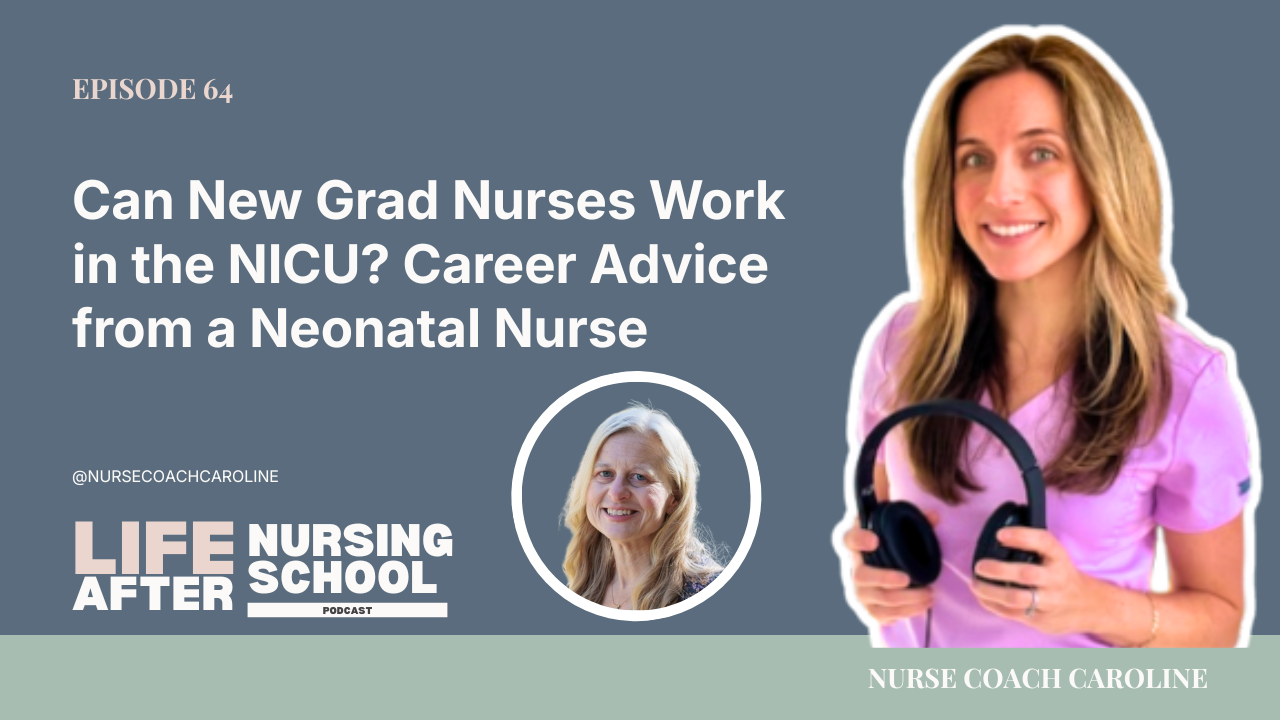
These are exactly the questions I explored during my conversation with Lisa Houston, MSN, RNC-NIC, C-ELBW, a neonatal nurse, nurse educator, and Business Development Manager at the Vermont Oxford Network (VON).
With more than two decades of NICU experience, Lisa has cared for countless babies and families while helping educate the next generation of neonatal nurses. One thing became clear during our conversation:
You don't have to have your entire nursing career mapped out on graduation day.
Sometimes the best opportunities are the ones you never expected.
Lisa Didn't Plan to Become a NICU Nurse
One of my favorite parts of Lisa's story is that the NICU wasn't originally part of her plan.

Like many nursing students, she entered nursing school with a different specialty in mind.
She expected to pursue pediatric oncology.
But during a job interview, someone encouraged her to consider the NICU instead.
That one conversation completely changed her career.
More than twenty years later, she still loves caring for newborns and their families.
It's a great reminder that your first plan doesn't have to be your final destination.
Sometimes another person sees strengths in us before we recognize them ourselves.
Keeping an open mind can lead to opportunities you never imagined.
What Does a NICU Nurse Actually Do?
Many people picture NICU nurses spending their shifts cuddling premature babies.
While there are certainly heartwarming moments, NICU nursing is much more complex than people realize.
NICU nurses care for newborns who are critically ill, premature, or have complex medical conditions requiring intensive monitoring and treatment.
Depending on the level of the NICU, nurses may care for babies who need:
Mechanical ventilation
Respiratory support
Feeding assistance
IV medications
Surgical recovery
Cardiac monitoring
Neuro-protective care
These tiny patients require highly specialized assessments and interventions.
Small changes can have significant consequences.
That level of complexity is one reason many nurses find neonatal nursing so rewarding.
Can New Graduate Nurses Work in the NICU?
The short answer is: Yes.

Many hospitals hire new graduate nurses directly into NICU residency programs.
However, competition can be strong.
Lisa emphasized that hiring managers are looking beyond GPA.
They want nurses who demonstrate:
Curiosity
Compassion
Adaptability
Strong communication
Willingness to learn
Emotional maturity
Technical skills can be taught.
Attitude often cannot.
How to Stand Out as a NICU Nurse Applicant
If your goal is becoming a neonatal nurse, there are several ways to strengthen your application.
→ Seek NICU Clinical Experiences
Whenever possible, request NICU clinical rotations or observational experiences.
Even limited exposure demonstrates genuine interest.
→ Ask Questions
Managers notice students who are engaged.
Be curious.
Ask thoughtful questions.
Volunteer to observe procedures.
Show enthusiasm.
→ Build Relationships
Introduce yourself to nurses.
Talk with educators.
Connect with managers.
Many nursing opportunities begin with simple conversations.
→ Keep Learning
Read about neonatal nursing.
Attend conferences.
Join professional organizations.
The willingness to learn is often more important than already knowing everything.
Mentorship Can Change Everything
One theme that repeatedly surfaced during our conversation was mentorship.
Lisa's career changed because someone believed she belonged in the NICU.
That experience shaped how she now supports newer nurses.
Mentors don't simply teach clinical skills.
They encourage.
They challenge.
They recognize potential.
They help nurses navigate difficult moments.
Every new nurse deserves someone willing to say: "You've got this."
Why Lifelong Learning Matters
One reason Lisa has remained passionate about nursing for more than twenty years is her commitment to continual growth.
Throughout her career she has:

Developed simulation-based education
Created evidence-based guidelines
Led neuroprotective care initiatives
Helped improve neonatal outcomes through quality improvement
Continued working bedside while advancing into leadership
Her career demonstrates something important:
Graduating nursing school isn't the end of learning.
It's just the beginning.
Healthcare constantly evolves.
The best nurses evolve with it.
Quality Improvement Saves Lives
Many nurses don't realize how much work happens behind the scenes to improve patient outcomes.
Lisa's work with the Vermont Oxford Network focuses on helping NICUs learn from one another through shared data, education, and quality improvement initiatives.
Instead of every hospital solving problems independently, organizations collaborate to identify best practices.
That means better outcomes for babies.
Better education for nurses.
Better care for families.
Quality improvement isn't just administrative work. It directly impacts lives.
The Emotional Side of NICU Nursing
Caring for critically ill newborns also means caring for frightened parents.
Families entering the NICU often experience fear, uncertainty, and grief.
NICU nurses become educators. Support systems. Advocates.
Sometimes simply sitting beside a parent and answering questions is just as important as any technical intervention.
Those relationships often leave lasting impressions on both families and nurses.
What Makes Someone Successful in the NICU?

Lisa believes successful NICU nurses share several qualities.
They remain calm under pressure.
They pay attention to detail.
They communicate effectively.
They're lifelong learners.
Perhaps most importantly, they approach both babies and families with compassion.
Clinical excellence matters.
But empathy matters just as much.
Five Pieces of Advice for Future NICU Nurses
1. Stay Open to Unexpected Opportunities
Your dream specialty may not be where your career ultimately leads.
Be willing to explore.
2. Find Great Mentors
The right mentor can change your entire career.
Don't be afraid to ask questions.
3. Never Stop Learning
Healthcare changes every year.
Curiosity will always serve you well.
4. Focus on Relationships
Parents will remember how you made them feel.
Your kindness matters.
5. Believe You Belong
Many new nurses doubt themselves.
Remember: Every experienced NICU nurse was once a brand-new graduate.
Final Thoughts
One of the biggest lessons from Lisa's story has very little to do with neonatal nursing.
It's about saying yes to opportunities.
One unexpected conversation redirected her career.
More than twenty years later, she continues caring for patients, educating nurses, and improving neonatal care across the country.
For nursing students, that's an encouraging reminder.
You don't need every detail of your career figured out today.
Stay curious. Find mentors. Be willing to learn.
Your nursing career will likely unfold in ways you never expected.
And sometimes, those unexpected paths become the ones you're most grateful for.
As always — I have one hand for me, and the other for you. 🤍
Signing Off…
Caroline
PS. Want more on this topic? Listen to Life After Nursing School Podcast Ep 64