
5 Common Mistakes New Grad Nurses Make During the Interview Process (And How to Avoid Them)
Entering the nursing workforce is one of the most exciting milestones in a nurse’s career. But before you can begin your first role, you have to pass one of the most important hurdles: the new grad nurse interview. Many new graduate nurses approach the interview process with anxiety and uncertainty, and in doing so sometimes make simple mistakes that can cost them their dream job. Understanding a few key new grad nurse interview tips can make a huge difference in how you show up and how hiring teams evaluate you.
As someone who has spent nearly a decade in various hiring roles within the healthcare industry, I’ve seen it all. From conducting interviews to reviewing resumes and making hiring decisions, I’ve learned what works, and what doesn’t, when it comes to impressing a hiring team. In this blog, I’ll share five essential new grad nurse interview tips, including the most common mistakes I’ve seen candidates make and how you can avoid them so you stand out for the right reasons during your nursing interview.
Before we dive into the most common interview mistakes, it's important to remember that interviews only happen after your application gets noticed. Many candidates underestimate how much their resume influences whether they even get an interview. If you want to avoid common application mistakes, check out my guide on nursing resume mistakes that cost nurses interviews.
Mistake #1: Rambling During “Tell Me About Yourself”

The first mistake new grad nurses often make is rambling during their introduction. The interview may start with the simple question, “Tell us a little about yourself.” Sounds easy enough, right? But many candidates struggle with this question. They begin strong, but soon lose their focus, feeling the pressure to add more details and, as a result, end up talking in circles.
Here’s the trick: Prepare your introduction like a well-structured story. A great introduction isn’t just a random set of facts; it’s a journey. Start with your name and your background—where you grew up, your education, and your nursing journey. Share what inspired you to become a nurse, and the major milestones along the way. Then, round it off by explaining why you’re excited about this new chapter and the opportunity in front of you.
I recommend writing out your “intro story” beforehand. Think of it like the script for a short film. For example:
Hi, I’m Caroline Danna. I’ll be graduating with my BSN this spring from Salve Regina University. My passion for nursing started when my sister became septic in sixth grade and was hospitalized. Watching my mom, a nurse, collaborate with the multidisciplinary team inspired me to pursue a career in nursing. Since then, I became a CNA in high school and continued to work as a PCT throughout college. In addition to my love for nursing, I’ve also been deeply involved in collegiate sports as the captain of both the Women’s Cross Country and Track and Field teams. I’m looking forward to beginning my nursing career and hope to plant my roots here in this Magnet-recognized institution.
Notice how I provide a concise but meaningful timeline of my journey—this is your roadmap for a memorable introduction. By including personal details (like your hobbies or any leadership roles) and showing passion for nursing, you make yourself relatable and likable, two qualities hiring teams appreciate. People often hire candidates they like and connect with, so don’t forget to inject personality into your introduction.
In addition to preparing a strong introduction for the “Tell me about yourself” question, many candidates overlook the importance of their first impression. Because your first impression actually occurs before the interview even begins, it can significantly shape how the hiring team perceives you. I discuss this further in my blog post on first impressions in nursing interviews.
Mistake #2: Not Preparing for Behavioral-Based Interview Questions
Behavioral-based interview questions are one of the most commonly used tools by hiring teams, and yet many new grads don’t prepare for them adequately. These questions typically start with “Tell us about a time when…” or “Can you describe a situation where…” and ask candidates to provide examples of past behavior to evaluate future performance. These questions are vital for assessing how well you work under pressure, handle conflicts, or contribute as part of a team.

The key to success with behavioral questions is preparation. Here’s a tip: before your interview, make a list of common themes these questions revolve around. Consider categories like teamwork, conflict resolution, time management, patient satisfaction, ethical dilemmas, prioritization, and safety concerns. For each category, think back to your clinical experiences and identify specific moments where you demonstrated these skills.
If you’re still in nursing school, take notes after each clinical shift. Did you handle a challenging situation with a patient? Did you help a team member resolve a conflict? By documenting these events in real time, you’ll be able to quickly recall examples during your interview and avoid the dreaded “deer-in-headlights” moment when you’re asked to think on your feet.
Most importantly, never fabricate a story. If you make up an example, an experienced hiring team will usually be able to tell. Instead, be honest and draw from real experiences that showcase your strengths and capabilities.
-> If you're preparing for interviews, download my List of Questions to Ask the Hiring Team so you can evaluate the unit culture and impress the hiring panel.
Mistake #3: Not Understanding What Hiring Managers Want
One of the most important things to remember during your interview is who you’re speaking to. The hiring team may include a nurse manager, a nurse residency program director, a recruiter, and possibly even a staff nurse or educator. Each person at the table has a different perspective and a unique goal, but ultimately, they are all looking for candidates who will fit well into the team and stay for the long term.
One key mistake many new grads make is failing to tailor their responses to the type of facility they are interviewing with. For instance, if you’re interviewing at a small community hospital, stating that your goal is to become a CRNA might not resonate, especially if that institution doesn’t offer ICU experience. On the other hand, expressing a desire to grow within the institution and eventually take on leadership roles or pursue certifications will likely impress the hiring team. Choosing the right workplace is an important part of the process as well. If you're still navigating the job search and trying to determine which opportunities are the best fit, this post on how to find the right new graduate nurse job may also help.
During interviews, always keep in mind the type of facility and the type of role you’re applying for. Be mindful of the team’s goals and tailor your responses to demonstrate that you’re a good fit. The hiring team wants candidates who will contribute to their institution’s mission and vision, so be strategic in presenting yourself as someone who shares those values.

Mistake #4: Not asking Questions During Your Nursing Interview
When it’s your turn to ask questions at the end of the interview, don’t leave the hiring team hanging by saying, “I don’t have any questions.” This makes it seem like you’re not fully invested in the opportunity or have done any research. Instead, come prepared with thoughtful questions that show you’re interested and engaged.
For example, asking “Can you tell me about a time a new grad nurse struggled on orientation and how the team supported them?” can give you valuable insight into how the institution supports its new hires. You can also ask for an expected timeline for the hiring process, so you know when to follow up.
Grab your List of Questions to ask the Hiring Team During your New Grad Interview, click the button below ⬇️
If you find that your questions were answered during the course of the interview, you can simply acknowledge that and say something like, “I had prepared a few questions, but I feel like you’ve already covered them. Can you share with me when I can expect an update about the position?”
By coming prepared with questions, you show the hiring team that you’re serious about the role and that you’ve put thought into your application. It’s a small detail that can leave a big impression.
Mistake #5: Not Having a Strong ‘Why Should We Hire You?’ Answer
Finally, don’t forget to end your interview with a clear, concise, and impactful summary of why you’re the best candidate for the job. This is your “pick-me” statement, or elevator pitch. When asked, “Why should we pick you?” don’t simply list adjectives like “I’m hardworking” or “I’m dedicated”—those words don’t have much substance without supporting examples.

Instead, point the hiring team back to your resume and highlight your specific achievements. Discuss your transferable skills, such as time management or leadership, and how they make you an ideal fit for the position. Be confident and emphasize your long-term interest in staying with the organization.
For example, if I were to answer this question, I would say:
“You should choose me because, as my resume shows, I have the skills and determination to balance the demands of nursing school while actively leading in collegiate sports and maintaining an above-average GPA. Through these experiences, I’ve developed strong time management, prioritization, and leadership skills, which I’m confident will translate well to my role as a nurse. I’m excited about the opportunity to grow with this organization and hope to make a long-term impact as part of your team.”
Your elevator pitch should reflect your strengths and demonstrate your fit for the role. Practice it so you can deliver it confidently and leave a lasting impression.
How to Prepare for a New Grad Nurse Interview
Preparing for a new grad nurse interview doesn’t have to feel overwhelming when you focus on a few key strategies. Hiring teams are not expecting perfection from new graduates — they are looking for candidates who demonstrate professionalism, self-awareness, and a willingness to learn.
Here are a few simple ways to prepare for your interview:
Research the hospital and unit beforehand
Take time to understand the organization’s mission, values, and patient population. This shows the hiring team that you are genuinely interested in working there.
Prepare a strong “Tell Me About Yourself” answer
This is one of the most common new grad nurse interview questions. Having a clear and concise introduction prepared helps you start the interview with confidence.
Practice answering behavioral interview questions
Many nursing interviews include behavioral questions such as “Tell me about a time you handled a difficult situation.” Preparing a few examples from clinical experiences can help you answer these questions more effectively.
Prepare thoughtful questions for the hiring team
Asking good questions shows engagement and professionalism. It also helps you evaluate whether the unit is the right fit for you.
-> Grab your free “List of Questions to Ask Hiring Team During an Interview” resource HERE
Send a professional follow-up email after the interview
A brief thank-you message reinforces your interest in the position and leaves a positive final impression.
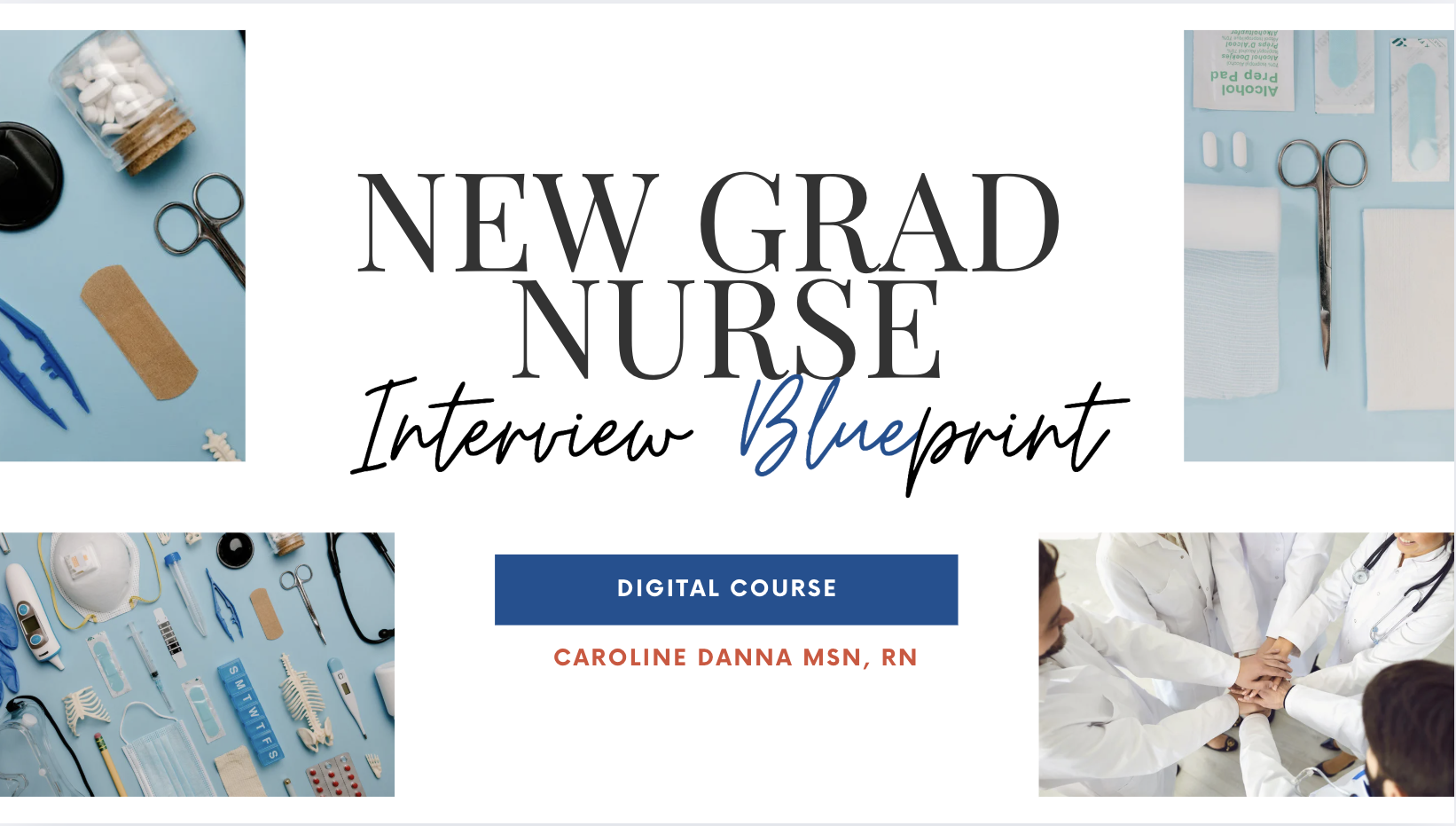
Click here to check out the New Grad Nurse Interview Blueprint
If you want a structured system for preparing your answers and practicing interview questions, I walk through the entire process step-by-step inside Interview Blueprint, my course designed specifically for new grad nurses preparing for interviews.
FAQ Section
FAQ: New Grad Nurse Interviews
What questions are asked in new grad nurse interviews?
New grad nurse interviews often include behavioral questions designed to assess how you handle situations in a clinical setting. Common examples include “Tell me about a time you handled a difficult situation,” “How do you prioritize patient care?” and “Why do you want to work on this unit?” Preparing structured examples from your clinical experiences can help you answer these questions confidently.
How should new grad nurses prepare for an interview?
Preparing for a new grad nurse interview means practicing answers to common behavioral questions, clinical based questions and character related interview questions. Other thoughtful and intentional ways to prepare for an interview would be to research the hospital and unit, preparing thoughtful questions for the hiring team (grab your free resource here!), and reviewing your clinical experiences so you can speak about them clearly. Practicing your answers ahead of time can significantly improve your confidence during the interview.
What do hiring managers look for in new graduate nurses?
Hiring managers look for candidates who demonstrate professionalism, strong communication skills, self-awareness, and a willingness to learn. While clinical knowledge is important, interviewers are often more interested in how you think through problems, communicate with patients and team members, and reflect on your experiences.
How can new grad nurses stand out in interviews?
New graduate nurses can stand out in interviews by providing clear and structured answers, sharing specific examples from clinical rotations, asking thoughtful questions about the unit culture, and demonstrating enthusiasm for learning and professional growth.
Is it normal to feel nervous during a nursing interview?
Yes, feeling nervous during a nursing interview is completely normal, especially for new graduates. The key is preparation. When you understand the types of questions you may be asked and practice your responses ahead of time, it becomes much easier to communicate confidently during the interview.
→ If you want a step-by-step system for preparing your answers, practicing behavioral questions, and walking into interviews confident instead of guessing, you can learn more about Interview Blueprint here.
Conclusion
Interviews are a crucial part of the nursing career journey, and by avoiding these five common mistakes, you’ll be one step closer to securing the job you want. Preparation is key—don’t just show up and hope for the best. Instead, take the time to plan your responses, research your audience, and practice your elevator pitch. With these strategies, you’ll set yourself up for success and make a positive impression on any hiring team.
If you're preparing for upcoming interviews, you may also find these new grad nurse interview tips and preparation strategies helpful so you can avoid common mistakes and confidently impress the hiring team.
Good luck, and happy interviewing!
Caroline
PS. Want more on this topic? Listen to Life After Nursing School Podcast Episode 6