
he science behind building confidence, developing resilience, and embracing a growth mindset in nursing and beyond.
Have you ever avoided doing something because you weren't sure you could actually pull it off?
Maybe it was applying for a nursing job you didn't think you were qualified for.
Maybe it was speaking up during clinical rotations, accepting a leadership opportunity, switching nursing specialties, or pursuing an entirely different career path.
Or maybe it had nothing to do with nursing at all.
Maybe it was running a marathon, starting a business, or finally taking a chance on something you've dreamed about for years.
Here's something I've learned after more than 14 years in nursing, several marathons, and building my own business:
You don't become confident by waiting until things feel easy. You build confidence by collecting evidence that you can do hard things.
And believe it or not, there's some fascinating psychology behind why challenging ourselves can be so beneficial.
Let's talk about it.
We Can Do Hard Things (Even When We Don't Think We Can)
I'm writing this after recording an episode of my podcast, Life After Nursing School, while sitting in a parking lot waiting for my husband to finish the bike portion of a Half Ironman.
Yes, you read that correctly.
My husband is out there swimming, biking 56 miles, and running a half marathon, and I'm sitting in our car thinking about what it actually takes to accomplish something like that.
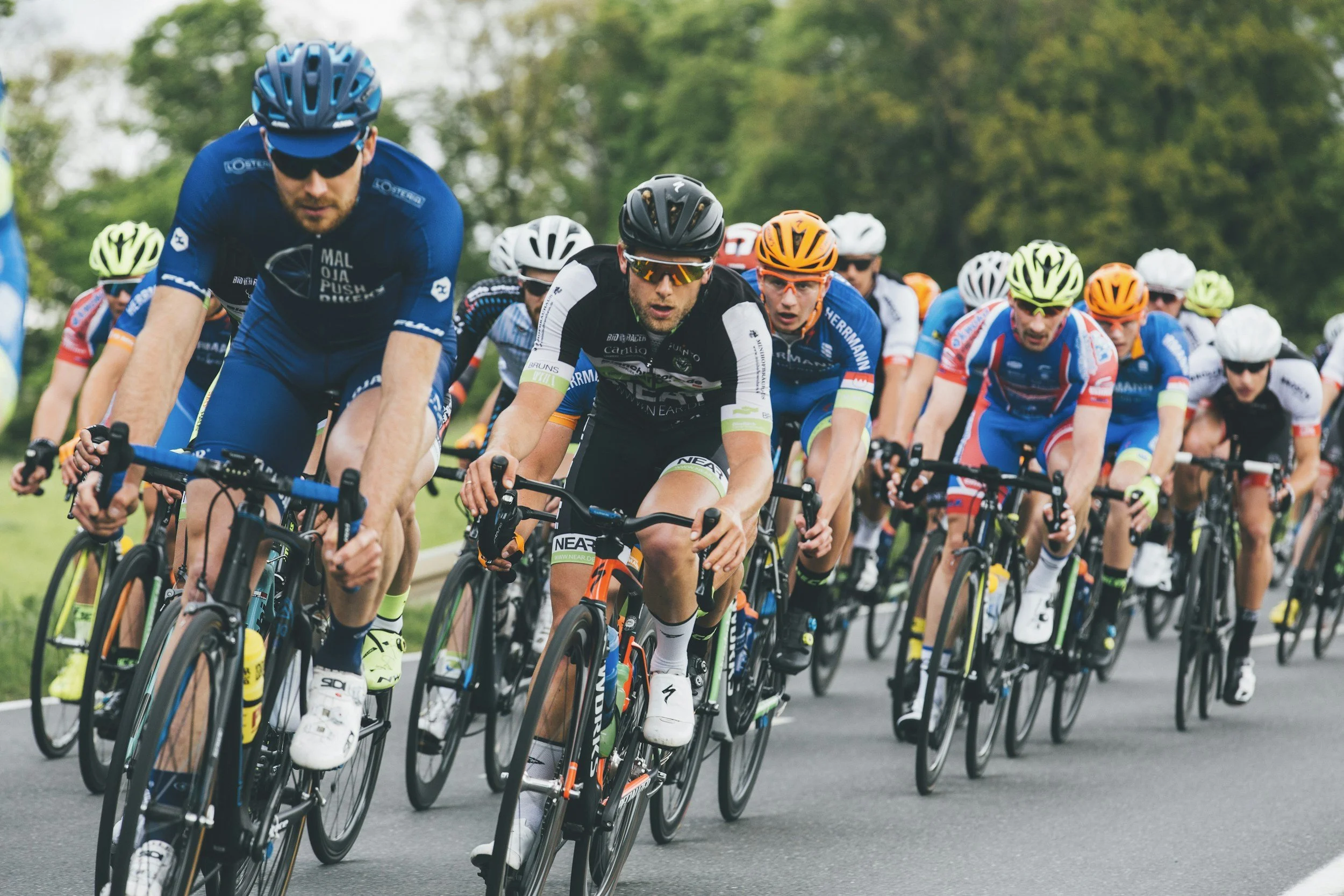
Because here's the thing.
The magic doesn't necessarily happen on race day.
It happens during the early mornings when you don't feel like training.
It happens when you're exhausted but show up anyway.
It happens when you're learning something new, struggling through the process, and slowly becoming more capable.
And that's something I think we forget when we're working toward big goals.
The version of you who starts working toward something difficult is often not the same version of you who finishes it.
You've learned. You've struggled. You've developed new skills.
You've grown.
Last year, my son's second-grade teacher taught his class a simple motto:
We can do hard things.
He came home repeating it, and it quickly became something our entire family embraced.
And honestly?
I think adults need that reminder just as much as second graders do.
Especially nurses.
Why Doing Hard Things Is Important for Nurses
Let's be real.
Becoming a nurse is HARD.
Nursing school is challenging. Clinical rotations can be intimidating. Preparing for the NCLEX is stressful.
And then you graduate, get your nursing license, and realize the learning has only just begun.
Your first year as a new grad nurse can feel like an endless series of uncomfortable firsts.
Your first patient assignment.
Your first IV insertion.
Your first rapid response.
Your first difficult conversation with a physician.
Your first time managing a patient whose condition is rapidly deteriorating.
And eventually, you might face entirely different challenges.
Switching nursing specialties. Becoming a charge nurse. Applying for a leadership position. Leaving the bedside. Starting a business.
Each new experience asks you to step outside what feels familiar.
But here's an important distinction: Doing hard things doesn't automatically make us stronger.
There's a difference between experiencing manageable challenges that help us grow and being exposed to chronic, overwhelming stress.
I'm certainly not suggesting nurses should tolerate unsafe working conditions, ignore burnout, or sacrifice their well-being in the name of personal growth.
Absolutely not.
I'm talking about intentionally pursuing meaningful challenges that stretch our abilities, teach us new skills, and help us recognize what we're capable of.
And psychology gives us several reasons why those experiences can be beneficial.
1. Doing Hard Things Builds Confidence Through Self-Efficacy
Have you ever heard of self-efficacy?
It's a psychological concept developed by Albert Bandura that describes our belief in our ability to accomplish a particular task.
Essentially, self-efficacy is about whether you believe you can do something.
And one of the most powerful ways to develop that belief is through what's called a mastery experience.
A mastery experience occurs when we successfully navigate a challenge, giving us evidence that we're capable of handling similar situations in the future.
Think About Your First IV Insertion
Remember how nervous you were?
Maybe your hands were shaking.
Maybe you were trying to remember every step while praying you wouldn't miss the vein.
And maybe you didn't get it the first time.
But you practiced.
You learned.
You tried again.
Eventually, something that once felt incredibly intimidating became routine.
Why?
Because you developed the skill and gained experience.
Your confidence grew alongside your competence.
Confidence isn't always something you need before doing hard things. Sometimes, confidence is what you earn by doing them.
This is particularly important for nursing students and new graduate nurses.
If you're waiting until you feel completely confident before applying for a job, attempting a new skill, or speaking up during clinical, you might be waiting a very long time.
Sometimes you have to do the thing first.
And let the confidence catch up.
How to Build Confidence as a New Nurse
Instead of expecting yourself to feel confident immediately, focus on building evidence of your progress.
Ask questions. Practice unfamiliar skills with appropriate supervision. Seek feedback from experienced nurses. Reflect on what you've learned.
And remember that making mistakes during the learning process doesn't automatically mean you're incapable.
The goal isn't perfection.
It's progress.
2. Challenging Yourself Can Help Build Resilience in Nursing
Let's talk about resilience.
It's a word that gets thrown around constantly in healthcare.
And sometimes, I'll admit, I get a little frustrated with how it's used.
Because nurses are often told to become more resilient when what they actually need is better staffing, stronger leadership, and healthier working environments.
But genuine resilience, the ability to adapt and cope with challenges, is still an important skill.
And there's a psychological concept called stress inoculation that helps explain how manageable challenges can improve our ability to navigate future stressors.
The basic idea is that when we're exposed to challenges we can reasonably manage, particularly when we have support and opportunities to practice coping skills, we can become better prepared for similar situations.
Think About Your First Rapid Response
Maybe your heart was pounding.
You were trying to remember what supplies to grab, who to call, and what your role was.
Everything felt overwhelming because it was unfamiliar.
Now think about an experienced nurse who's participated in dozens of rapid responses.
Is it still stressful?
Of course.
But that nurse has experience.
They understand the process.
They've practiced responding under pressure.
And they have previous experiences to draw from.
That doesn't mean every nurse will respond the same way or that stressful situations become easy.
It means experience, preparation, and support can help us become more capable of navigating them.
Not All Stress Is Good Stress
This distinction is SO important.
Being challenged while learning a new nursing skill with a supportive preceptor is one thing.
Being assigned an unsafe patient load without adequate training or support is something entirely different.
One can provide an opportunity for professional growth.
The other can put patients and nurses at risk.
Growth requires challenge. It does not require suffering.
And I think that's something our profession needs to remember.
3. Doing Hard Things Can Change Your Perspective
One of the hardest experiences of my life was caring for my father when he had terminal cancer.
It was incredibly difficult emotionally.
And I would never suggest that losing someone you love is something you need to experience to become stronger.

I wouldn't wish that experience on anyone.
But I can say that it changed my perspective on life.
There are things that once felt incredibly intimidating to me that simply don't carry the same weight anymore.
Putting myself out there on social media?
Starting a business?
Taking a professional risk?
Those things can still make me nervous.
But when I compare them to what I experienced caring for my dad, they don't feel nearly as overwhelming.
That experience helped me recognize something important: Not every uncomfortable situation is dangerous, and not every hard thing is equally hard.
Sometimes we treat uncertainty like a much bigger threat than it actually is.
We imagine everything that could go wrong.
We convince ourselves we're not ready.
We avoid opportunities because we're afraid of failing.
But when we look back at everything we've already navigated, we may realize we're more capable than we give ourselves credit for.
And that brings me to another fascinating benefit of challenging ourselves.
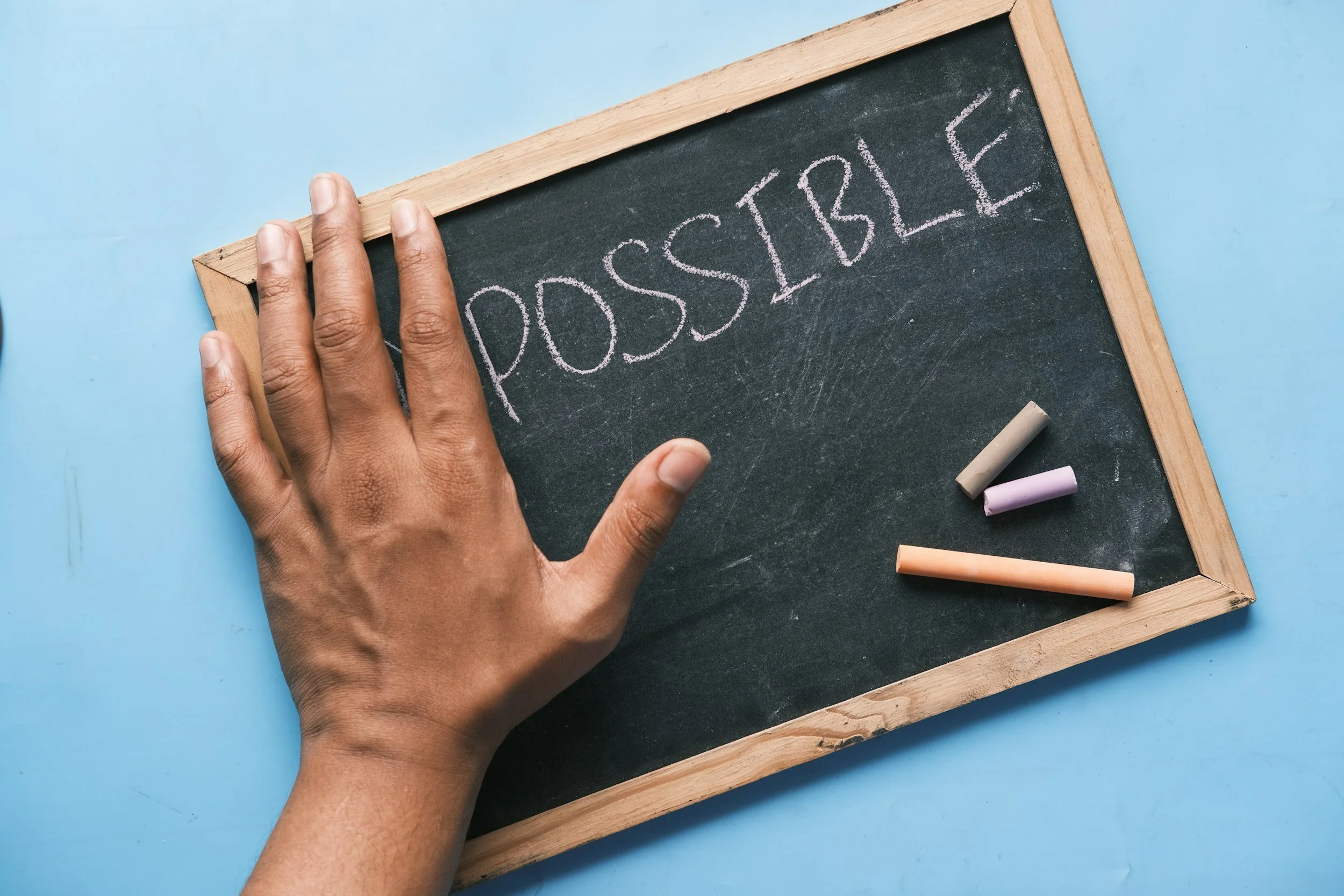
4. A Growth Mindset Can Expand What You Believe Is Possible
Have you ever thought:
"I'm just not that kind of person"?
Maybe you've told yourself you're not a leader.
You're not athletic.
You're not good at public speaking.
You're not someone who could start a business.
But how do you know?
Sometimes we confuse the things we've never done with the things we're incapable of doing.
And that's where developing a growth mindset becomes so important.
A growth mindset is the belief that abilities and skills can develop through learning, effort, effective strategies, and feedback.
It doesn't mean anyone can accomplish absolutely anything.
But it does encourage us to view our current abilities as something that can change.
From Running 5Ks to Marathons
I've been a runner since high school.
When I first started running competitively, I mostly raced 5Ks.
That's just over three miles.
And at the time, I considered myself a 5K runner.
Years later, I decided to try a half marathon.
Suddenly, after training to run 13.1 miles, a three-mile run didn't seem quite so intimidating anymore.
Eventually, I thought: Well, if I can run a half marathon, maybe I could run a full marathon.
Fast-forward, and I've completed approximately six marathons.
SIX!
But when I was running those early 5Ks, I wasn't sitting there imagining myself running 26.2 miles.
That wasn't even on my radar.
It was through years of gradually challenging myself that I began to recognize what was possible.
Each experience expanded my belief in my abilities.
And honestly?
The same thing happened in my professional life.
5. Why Stepping Outside Your Comfort Zone Can Transform Your Nursing Career
When I first started Nurse Coach Caroline, I remember thinking about how amazing it would be to create an entire career preparation platform for new graduate nurses.
A place where nursing students and new grads could get help with resumes, interviews, and navigating the nursing hiring process.
But almost immediately, I thought: I could never create something like that. Someone else would have to do it.
It felt so far outside my abilities.
Fast-forward three years.
And here I am preparing to launch LuminaRN, an AI-powered career preparation platform built around what I've learned through nursing leadership, recruiting, and coaching new graduate nurses.
WHAT?!
I recently came across a TikTok memory from two years ago.
It was a video of me promoting a free webinar about the new grad nursing job search.
And I stopped for a second because it hit me just how far I've come.
Two years ago, I was hosting free webinars.
Now I'm preparing to introduce an entire career platform to nursing students.
And I'm not sharing that to brag.
I'm sharing it because the version of me who started Nurse Coach Caroline couldn't fully imagine what the version of me today would be capable of.
I think that's true for so many of us.
We underestimate our future selves because we're evaluating what's possible based on who we are today.
But you're not going to be the same person a year from now.
Not if you keep learning, developing your skills, and taking meaningful steps toward your goals.
How to Do Hard Things When You're Afraid of Failing
Okay, but Caroline.
Hard things are HARD.
Girl. I KNOW.
I overthink things too.
I question myself.
I get overwhelmed.
And there are definitely moments when I want to run in the opposite direction.
But over the years, I've developed a few strategies that help me navigate challenges.
Here are four things I do when something feels intimidating.
1. Ask Yourself: Am I Saying No Because It's Wrong for Me, or Because It Scares Me?
This is a BIG one.
Sometimes an unexpected opportunity comes along, and our immediate reaction is to say no.
Not because it's necessarily a bad opportunity.
But because it's unfamiliar.
We don't know how it's going to go.
We're afraid we won't succeed.
And saying no feels safer.
So I've started asking myself: Do I actually not want to do this, or am I just afraid I won't be able to pull it off?
Those are two very different things.
Maybe an opportunity genuinely doesn't align with your priorities.
Maybe you don't have the time.
Maybe it isn't something you want.
Those are completely valid reasons to say no.
But if the only thing holding you back is the fear that you might not be good enough?
That's worth exploring.
The Speaking Opportunity I Almost Turned Down
Recently, I registered LuminaRN to have an exhibitor booth at a nursing student convention in California.
And let me tell you, it was a LAST-MINUTE decision.
I was already overwhelmed with ordering banners, business cards, handouts, and other conference materials.
Then I received an email from the convention coordinator.
She asked if I'd be interested in presenting at the conference.
They had one spot remaining, and she thought I'd be a great fit.
She also mentioned that she completely understood if it was too last-minute.
Guys.
I immediately started drafting an email filled with questions.
How many people would be attending?
Would I need a slideshow?
How long would I have to speak?
Would I have enough time to prepare?

And then I stopped.
I looked up at my vision board.
And I SHIT YOU NOT.
There was literally a picture of someone speaking at a conference.
I looked at my husband and explained the situation.
And he jokingly said: "I will divorce you if you don't say yes."
And I was like... WAIT. WHAT AM I DOING?!
This was literally an opportunity I'd been hoping for.
And here I was trying to find reasons to turn it down.
I deleted the email I'd drafted and accepted the invitation.
Because I realized something.
Sometimes we're not afraid of the opportunity itself. We're afraid of not knowing exactly how it's going to go.
2. Focus on the Next Step, Not the Entire Mountain
When I trained for my first marathon, I didn't spend every day worrying about the 18- or 20-mile training runs coming later.
If I had, I probably would've freaked myself out.
Instead, I focused on the week ahead.
What runs did I need to complete?
What was my long run that weekend?
One week at a time.
And something interesting happened.
By the time those longer training runs arrived, they didn't feel nearly as intimidating.
Because I'd gradually worked my way up to them.
I approach business the same way.
If I'd sat down three years ago and made a list of everything required to build an AI-powered nursing career platform, I probably would've closed my laptop.
Instead, I focused on the next step.
One project.
One decision.
One new skill.
One conversation.
And eventually, those small steps started adding up.
So if you're feeling overwhelmed by a big goal, ask yourself: What's the next step I can take?
Not the next 50 steps.
Just the next one.
3. Think About How You'll Feel Afterward
This is especially helpful when the challenge involves performance.
A job interview.
A presentation.

A marathon.
A difficult conversation.
When I'm running a marathon, I think about crossing the finish line.
Not how I'll feel physically.
Because physically?
I usually feel like absolute garbage. 😂
But emotionally?
That feeling of accomplishment is incredible.
And I remind myself of that when things get difficult.
I also ask myself another question: Would I rather experience the satisfaction of knowing I tried or the regret of knowing I never gave myself a chance?
That's exactly how I approached the speaking opportunity.
Could something go wrong?
Of course.
Maybe I stumble over my words.
Maybe the technology doesn't cooperate.
Maybe I forget something important.
But I already know I'll be glad I said yes.
And if I'd turned it down?
I know myself.
I would've spent the entire conference wondering why I didn't give it a shot.
4. Remember That Meaningful Things Take Time
We live in a world where everyone wants immediate results.
We want success.
We want confidence.
We want the accomplishment.
We want to reach the finish line.
But we don't always appreciate what it takes to get there.
When I think about the things I'm most proud of, they almost always required time, patience, and effort.
They challenged me.
They made me question myself.
And they required me to keep showing up.
Sometimes I even like to think of unexpected opportunities as little nudges from the universe.
Almost like it's saying:
Hey, you've been asking for this. Here's your chance.
Does that mean everything will work out perfectly?
Absolutely not.
But sometimes it's the reminder I need to trust the experience I've built and give myself a chance.
Nursing Students and New Grads: You Are More Capable Than You Think
If you're currently in nursing school or navigating your first year as a nurse, I want you to remember something.
You are not supposed to know everything right now.
You're not supposed to feel confident performing every skill.

You're not supposed to have your entire nursing career figured out.
You're learning.
And learning often involves uncertainty, discomfort, and challenges.
But that doesn't mean you're failing.
It means you're developing the skills and experience that will help you become a more capable nurse.
Maybe the hard thing you're facing right now is passing pharmacology.
Maybe it's preparing for the NCLEX.
Maybe it's applying for your first nursing job after receiving rejection emails.
Or maybe it's recognizing that your current nursing position isn't right for you and deciding to pursue something different.
Whatever it is, remember that your current circumstances don't define your future capabilities.
You can be a beginner and still be capable of accomplishing incredible things.
Final Thoughts: You Can Do Hard Things
I want to leave you with a question.
When was the last time you did something that genuinely scared you?
Not because it was dangerous.
Not because it was unhealthy.
But because you weren't sure you could actually pull it off?
Maybe there's something you've wanted to do for years, but every time the opportunity comes around, you find another reason to put it off.
Here's what I want you to consider: What if the thing you're avoiding because it feels hard is actually one of the experiences that could help you grow the most?
What if a year from now, you're looking back at this version of yourself thinking:
Wow. I can't believe I almost didn't do that.
Because doing hard things isn't just about the accomplishment.
It's about the person you become while working toward it.
It's about building evidence that you're capable.
It's about expanding your understanding of what's possible.
And it's about realizing that you don't have to feel completely ready before taking the first step.
Remember what my son's second-grade teacher taught him?
We can do hard things.
And I think sometimes, as adults, we need that reminder just as much as second graders do.
Your Challenge This Week
Think of one thing you've been putting off… not because it doesn't matter to you, but because you're afraid it might be difficult.
And take one step toward it.
It doesn't have to be a giant leap.
Just one step.
Because you don't become confident by waiting for things to feel easy. You become confident by collecting evidence that you can do hard things.
And who knows?
Maybe the next version of you is waiting on the other side of something you've been afraid to try.
As always — I have one hand for me, and the other for you. 🤍
Signing Off…
Caroline
PS. Want to listen to the full conversation? Listen to Life After Nursing School Podcast Ep 73